How long before you can drive on new concrete?
How long does concrete take to cure before you can drive on it? For a car, plan on about 7 days. You can walk on it after a day or two, and heavy trucks should wait for about 28 days. Cold weather pushes all of those dates back, and how the slab is cured matters as much as how long you wait.
Updated
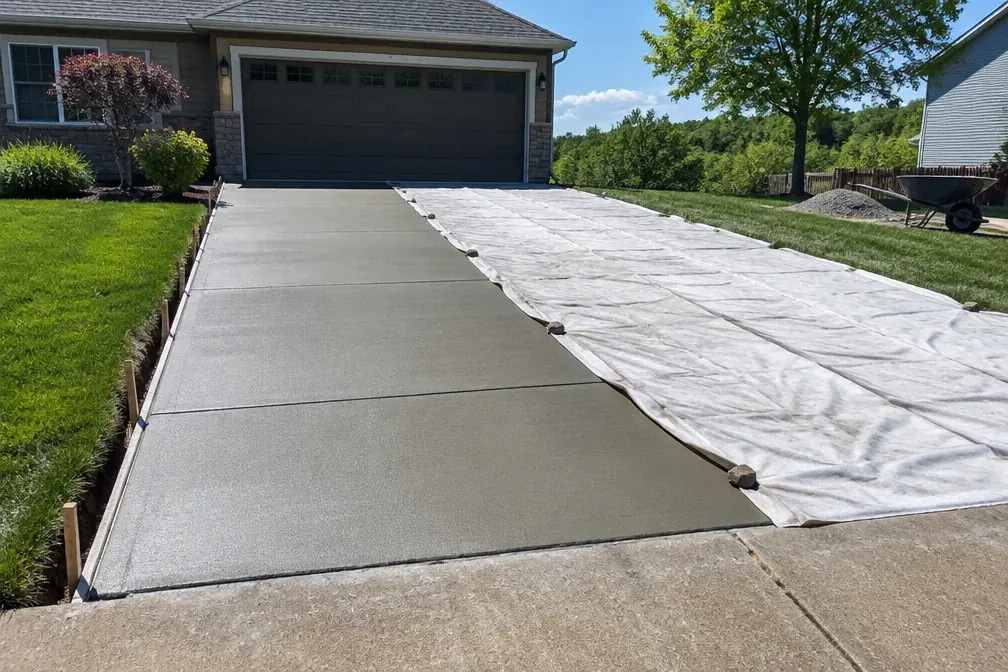
| What you want to do | Warm weather | Cool weather, 40s to 50s |
|---|---|---|
| Walk on it | 1 to 2 days | 2 to 3 days |
| Take off the forms | 1 to 2 days | 2 to 4 days |
| Park a car | 7 days | 10 to 14 days |
| Park a pickup or van | 10 days | 14 days or more |
| Heavy trucks or RVs | 28 days | 28 days or more |
| Apply sealer | 28 days or more | Wait for spring |
Concrete cures, it does not dry
Concrete gets hard through a chemical reaction between cement and water, so it's not just drying out. That reaction goes on for weeks, and it needs moisture and warmth. If a slab dries too fast, the top never reaches full strength, and it can dust or scale for the rest of its life. That's why a surface can look done and still be far from ready.
Concrete reaches about 70 percent of its design strength in 7 days, and reaches its design strength at about 28 days. It keeps on gaining slowly after that. The 7-day mark for cars comes from that first number. It's enough for ordinary use, as long as you avoid turning your wheels while you're parked, which grinds the fresh surface.
The first week, day by day
Here's what normally happens after a driveway is poured in decent weather.
- Pour day: keep people, pets and leaves off the surface
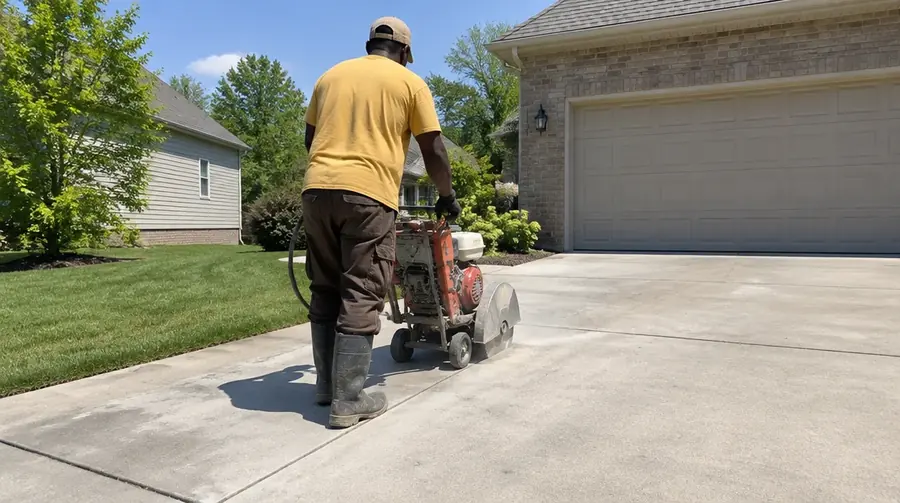
- Within about a day: saw cuts go in before random cracks can form
- Days 1 to 2: light foot traffic is fine, and forms start coming off
- Days 2 to 3: backfill along the edges, once the concrete is strong enough
- Days 1 to 7: keep it curing with a curing compound, a cover or a light mist
- Day 7: cars may use it, and try to avoid sharp turns on the slab
- Day 28: open it to heavy loads, and think about sealing it
Can you pour a driveway in winter?
You can, but it takes more care and more money. The main rule is that fresh concrete must not freeze. If it freezes in the first day or so, it can lose a big share of its strength for good. Below about 40 degrees, the work counts as cold-weather concreting. The crew may use warm mix water, an accelerator and insulated blankets, and it needs to keep the slab above 50 degrees for the first few days.
The ground must not be frozen either, since frozen ground can settle when it thaws and it chills the slab from below. In a normal Pittsburgh year, you can often pour from April through early November, with more risk at both ends. If you can wait until spring, you'll usually pay less and get a slab with a better first winter ahead of it, because new concrete shouldn't be salted in its first season.
What about rain or heat?
Light rain after the surface has been finished usually does no harm. Rain during finishing is another matter. Water worked into the top weakens it, which can lead to dusting and scaling later on, so crews cover the slab or wait. A heavy storm on a fresh slab can pit the surface. We watch the forecast and move the pour when we need to.
Hot, dry and windy days are their own problem. The top can dry and crack before the crew is finished. Starting early, dampening the base and using a curing compound right after finishing all help. A driveway poured in the shade of a house may also set at a different rate from one in full sun, so the crew has to keep an eye on that.
Caring for a new driveway
The first year has an outsized effect on how a slab ages. A few simple habits make a real difference.
- Keep cars off for at least 7 days, and heavy trucks for 28
- Don't use deicing salts in the first winter
- Use sand for traction instead
- Clear snow with a plastic shovel where you can
- Clean up oil, gas and fertilizer soon after a spill
- Don't let cars sit with hot tires on fresh concrete
What crews do to help a slab cure
Good curing is mostly about keeping moisture in. Most crews spray a curing compound right after finishing, which forms a thin film that slows drying. Others cover the slab with plastic or wet burlap. On a cool day, insulated blankets hold in the heat the concrete makes as it hardens. If your quote doesn't say how the slab will be cured, ask, since it's cheap to do and costly to skip.
After the cure
Once the slab has cured for a month and the weather is right, a penetrating sealer is your next step. See concrete driveway sealing for when and what to use. If you're planning a pour and want a price, the concrete driveway cost estimator gives you a planning range for your size and finish.
Common questions
How long before you can drive on new concrete driveway?
About 7 days for a car, and longer in cool weather.
How long before you can park on new concrete driveway?
Plan on 7 days for a car and 10 for a pickup or a large van.
How long before you can walk on concrete driveway?
Usually after 24 to 48 hours.
How long does concrete take to cure for driveway?
About 28 days to reach design strength, though it's usable well before that.
How long does a concrete driveway need to cure?
Give it 7 days before cars and 28 days before heavy loads or sealer.
How many days for concrete driveway to cure?
About 28 days for design strength, with most of the early gain in the first week.
How long does concrete take to dry for a driveway?
The surface looks dry in hours, but the slab takes weeks to cure.
How long does concrete take to cure in cold weather?
Much longer. Curing slows sharply below 50 degrees and nearly stops near freezing.
How long does concrete take to dry to drive on?
About a week in decent weather, and two weeks or so if it's cold.
Can you pour a concrete driveway in the rain?
Not in a steady rain. Light rain after finishing is usually fine.
Can you pour a concrete driveway in cold weather?
Yes, with protection, as long as the ground and fresh slab don't freeze.
What temperature can you pour concrete driveway?
Above about 40 degrees and rising is easiest. Colder pours need blankets and additives.
Can you install a driveway in winter?
Yes, on the milder days, but it costs more. Most homeowners here wait for spring.
How long does concrete last?
A well-built driveway can last 30 years or more. Many old slabs around Pittsburgh have done far better.
More driveway services
- concrete driveway installation
- concrete driveway replacement
- concrete driveway repair
- concrete driveway resurfacing
- stamped concrete driveway
- exposed aggregate concrete driveway
- driveway trench drain
- driveway drainage
- driveway apron
- concrete driveway sealing
- driveway crack repair
- sunken driveway repair
- driveway extension