Driveway permit rules in Pittsburgh
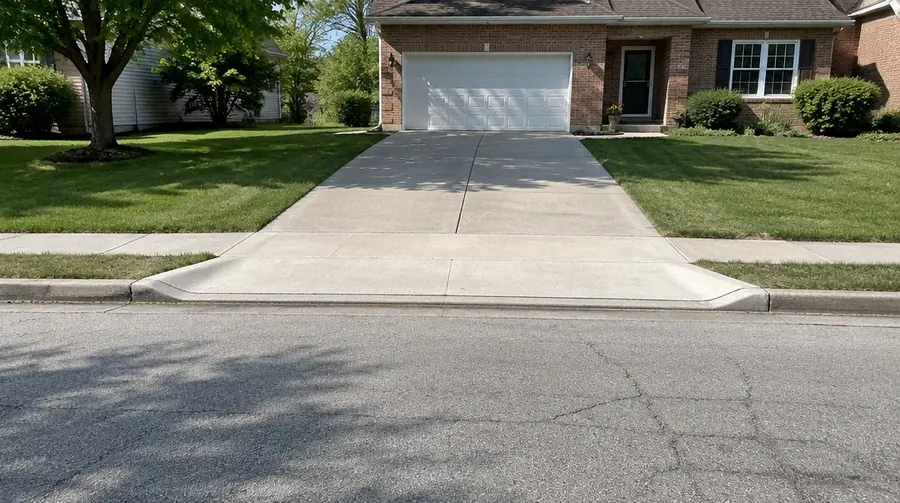
A driveway permit in Pittsburgh is mostly about the curb cut, the opening where your driveway crosses the sidewalk and meets the street. The city treats that as work in the public right-of-way, and it has its own rules about where a curb cut can go and how wide it can be. This guide sums up the City of Pittsburgh's published rules. Only the city can say what's allowed on your property.
Updated
| Situation | What the city says |
|---|---|
| A new curb cut for a driveway, garage or parking pad | A Curb Cut Permit application is required |
| Widening the opening at the curb | An application may be required |
| Repairing or rebuilding an existing curb cut | An application may be required |
| No permit on file for an existing curb cut | An application may be required |
| More parking spaces, a new garage or a change of use | An application may be required |
| A curb cut on a private street | No DOMI curb cut permit, but the private street needs one where it meets a public street |
Who is in charge of what
In the City of Pittsburgh, three offices can be involved. The Department of City Planning handles zoning, the Department of Mobility and Infrastructure (DOMI) handles the curb cut and anything else in the public right-of-way, and Permits, Licenses and Inspections (PLI) handles building permits, for example if a new garage is part of the plan. Applications for all three go through the city's OneStopPGH portal.
DOMI's Curb Cut Permit Information Sheet says a curb cut permit grants permission for access from the public right-of-way and permission to construct the driveway. The city's code, at Pittsburgh Code § 413.02, covers work on curbs and sidewalks in the right-of-way. The Department of City Planning's handout on driveway and curb cut requirements adds that no work may begin until Zoning, DOMI and PLI have approved the application.
When the city asks for a curb cut permit
DOMI's Specifications for the Installation of Curb Cuts for Off-Street Parking, updated March 2024, say that a Curb Cut Permit application must be submitted for all new curb cuts, including driveways, residential garages and parking pads. It also lists times when an application may be required for an existing curb cut: when no permit is on file, when the property's use changes, when more parking spaces are served, when a new garage is proposed, when the owner wants to make the opening wider, and when the curb cut needs repair or reconstruction.
That last point surprises people. Replacing the driveway apron usually means rebuilding the curb cut, so it can fall under the rules even if the driveway has been there for decades. Work that stays entirely on your own lot is a separate question, and it's one for the city's zoning staff. If you're planning a driveway extension or a new parking pad, ask before you plan around it.
How the process works
The city's published guidance describes these steps. Times and fees change, so check the current versions on OneStopPGH before you rely on them.
- File a Zoning and Development Review application on OneStopPGH with a site plan
- Zoning reviews it and may give approval on the condition that DOMI approves the curb cut
- Apply to DOMI for the curb cut permit, with the site plan and photos of the sidewalk, curb and street as they are now
- DOMI says to allow two to four weeks for review once the application is complete, longer if an exception is needed
- If approved, Zoning issues a Record of Zoning Approval for the curb cut
- The permit is valid for six months from its start date
- DOMI requires three inspections: before work, after the forms are set and before the pour, and after the concrete has set
Where a curb cut can go
DOMI's specifications set out where curb cuts may be allowed, and they're stricter than many people expect. In some zoning districts, including Local Neighborhood Commercial, Urban Neighborhood Commercial and the high-density residential districts, curb cuts are restricted to alleys. Elsewhere, a curb cut may be allowed on the lowest-order street next to the property, so an alley comes before a local street.
The specifications also give distances. Among them: at least 20 feet from an intersecting street's right-of-way for most homes, at least 20 feet from the edge of a crosswalk, at least 6 feet from another curb cut, and at least 15 feet from a transit stop on the same side of the street. The whole curb cut, flare to flare, has to fall within your own frontage unless it's shared, and some lots are simply too narrow for a curb cut on the street. If there's a street tree where the work would go, the City Forester also reviews it.
None of this tells you what DOMI will decide for a given property. It does explain why two neighbors can get different answers, and why it's worth checking before you design a driveway around a new opening at the street.
Outside the city limits
Most of Allegheny County isn't in the City of Pittsburgh, and each borough and township writes its own rules. Some only care about the apron and the curb. Others review any new paving, the amount of a lot that's paved or how water leaves the driveway. Call your municipal office before you plan the job, and ask who handles a driveway permit and work at the street.
The road matters too. A driveway that meets a state route generally needs a PennDOT highway occupancy permit for the connection. If it meets a county road, Allegheny County Public Works may be involved. Driveways that cross a roadside ditch often need a pipe under them, and the municipality or PennDOT may set its size. See our Allegheny County page for more on how this varies.
What we do before a driveway job
We look up who has a say over a driveway permit at your address before we quote, and we'll tell you what we found and where the rules are published. Where a permit applies, we assist with the application as part of the job. The decision itself belongs to the city or your town, and the timing is theirs too, so we plan the pour around their review.
If your job includes work at the street, read our page on the driveway apron, which covers the thickness, steel and transitions an apron needs. Our concrete driveway cost guide lists what street work adds to a typical price.
Common questions
Do you need a permit to cut a curb?
In the City of Pittsburgh, a Curb Cut Permit application is required for every new curb cut, through DOMI. Other towns set their own rules.
Can I widen my driveway without a permit?
In the city, making the opening at the curb wider may need a curb cut permit. Widening only on your lot is a zoning question, so ask the city or your town first.
Do you need a permit to remove a driveway?
If an old curb cut is closed, the city's specifications say the curb and sidewalk must be restored to city standard with the right permits. Ask DOMI before you start.
Do you need a permit to install a driveway culvert?
Often, when the pipe sits in a roadside ditch. Your municipality, or PennDOT on a state road, decides the permit and the pipe size.
More driveway services
- concrete driveway installation
- concrete driveway replacement
- concrete driveway repair
- concrete driveway resurfacing
- stamped concrete driveway
- exposed aggregate concrete driveway
- driveway trench drain
- driveway drainage
- driveway apron
- concrete driveway sealing
- driveway crack repair
- sunken driveway repair
- driveway extension