Ice melt safe for concrete driveways in Pittsburgh
Is there an ice melt safe for concrete? Not completely. Every melter turns ice into water, and water that soaks in and refreezes is what flakes a driveway apart. But some products are much gentler than others, and how much you use, when you use it and whether the slab is sealed matter more than the brand on the bag.
Updated
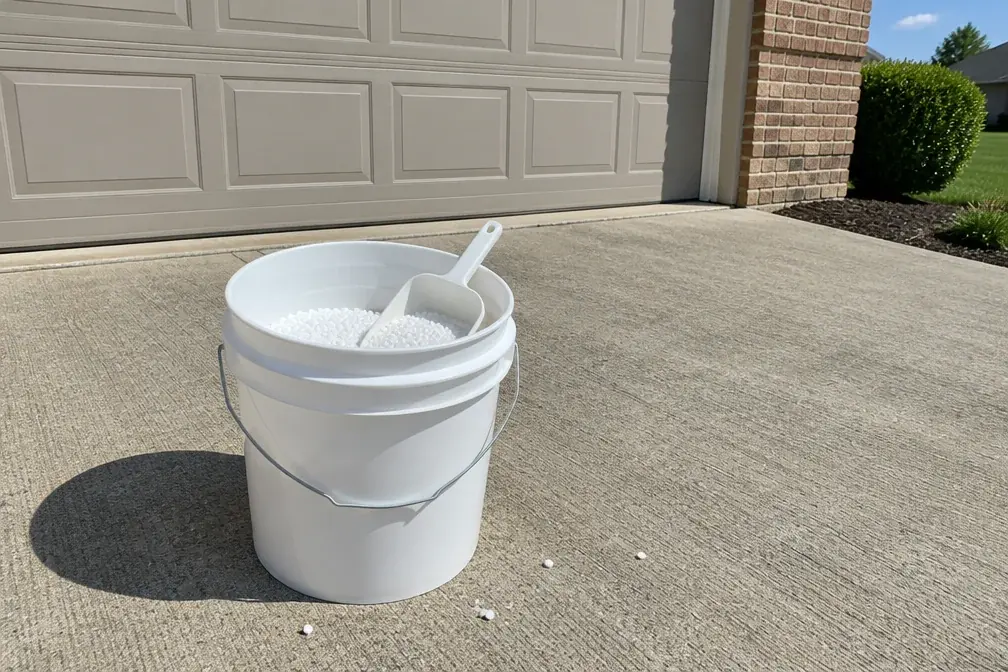
| Melter | Works down to about | Worth knowing |
|---|---|---|
| Rock salt (sodium chloride) | 15 to 20°F | Cheapest, and the main cause of surface scaling |
| Calcium chloride | Well below 0°F | Fast and strong, but use it sparingly |
| Magnesium chloride | Around 0°F | Gentler on plants, still a chloride |
| Potassium chloride | Around 25°F | Slow in deep cold |
| Calcium magnesium acetate (CMA) | Around 20°F | The gentlest on concrete, and the most expensive |
| Fertilizer types (ammonium nitrate or sulfate) | Varies | Avoid them: they attack concrete |
| Sand or grit | Does not melt | Grip with no chemicals at all |
Why salt is hard on a concrete driveway
Plain rock salt doesn't eat concrete the way people often think. The damage is mostly physical. Salt melts ice into a brine, and that brine soaks into the top of the slab. When the temperature drops again, it freezes and expands, and every swing above and below freezing pushes a little harder on the surface. Pittsburgh winters bring a lot of those swings, which is why so many local driveways flake near the garage and along the edges.
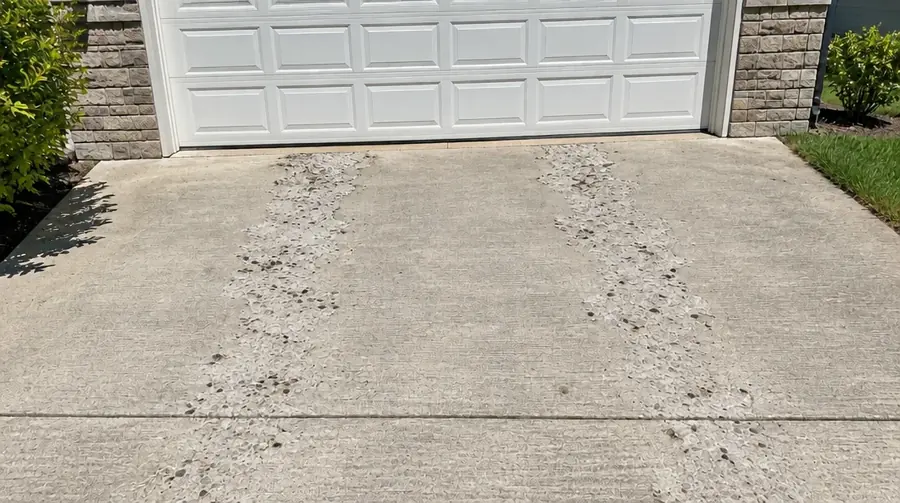
Salt also keeps the surface wetter for longer, and it draws more water into the pores. So a salted driveway goes through more freeze-thaw cycles, with more water in it each time, than one that's only shoveled. Over a few winters the top layer of cement paste lets go and the stone starts to show. That's called scaling, and once it starts it tends to spread.
Some of the salt on your driveway never came out of your bag. City and PennDOT trucks spread salt and brine on the roads, and your car carries it home. It drips off in the same few spots every night, usually in front of the garage door, which is often the first place to scale.
Which ice melt is safest for concrete?
If you want the ice melt safe for concrete that does the least harm, calcium magnesium acetate, sold as CMA, is the gentlest on concrete. It costs a lot more than rock salt and works best on light ice, so most people keep a small bag for the steps and the steepest part of the drive.
Among the chlorides, calcium chloride and magnesium chloride work at lower temperatures than rock salt, so you need less of them on a cold morning. That's their main advantage. Research at Purdue University and elsewhere has also found that strong calcium and magnesium chloride solutions can react with the cement paste itself, so 'more is better' doesn't apply here. A light, even scatter is what you're after.
Stay away from anything based on ammonium nitrate or ammonium sulfate, which you'll find in some fertilizers. These attack concrete chemically, and the damage is far worse than salt scaling. Labels that say 'pet safe' or 'safe for plants' are about paws and lawns. They don't tell you how a product treats concrete, so read the ingredients.
When it's colder than about 15°F, rock salt barely works, and people tend to pour on more of it. That's the worst habit of all. On those days, sand or a fine grit gives you traction without adding water to the slab.
New concrete needs a salt-free first winter
Concrete keeps gaining strength for weeks after it's poured, and it needs time to dry out. A slab poured in late summer or fall goes into its first winter wetter and weaker than it will ever be again. Keep all deicers off it that first winter, including the 'concrete safe' ones. Use sand for grip and shovel early.
That includes the salt your car brings home. If you can, rinse the floor of the garage and the area in front of it on mild days, or park on the street for the worst stretch of a storm. Our guide on how long before you can drive on new concrete covers the rest of the first year.
Sealing is your best defense
A good sealer keeps brine from soaking in, and that's the single best thing you can do for a driveway that sees salt. On a plain broom-finish driveway, a clear penetrating sealer is usually the right choice. It soaks into the top of the slab, leaves no film to wear off and doesn't make the surface slick. See our guide to the best concrete driveway sealer for the types and what to look for on the label.
Seal before winter, on a dry day above 50°F, so the sealer is cured before the first salt goes down. Most penetrating sealers last three to five years. If water no longer beads up when you splash it, it's time to reseal. Concrete driveway sealing runs about $1 to $3 per square foot when we do it, including the wash and any joint repairs.
Snow habits that save the surface
How you clear the snow matters about as much as what you put down. These habits cut the amount of melter you need, and the water left sitting on the slab.
- Shovel early and often, before cars pack the snow into ice
- Use a plastic shovel or a blade with a rubber edge, as steel chips the joints
- Scatter melter thinly and evenly, enough to break the bond, not to turn the drive white
- Push slush off the slab once it melts, so the brine does not refreeze on the surface
- Don't pile salty snow from the street along the edge of the driveway
- Sweep up leftover salt on dry days, and rinse the slab once winter is over
- Keep downspouts from emptying onto the driveway, where they freeze into sheets of ice
Signs salt damage has started
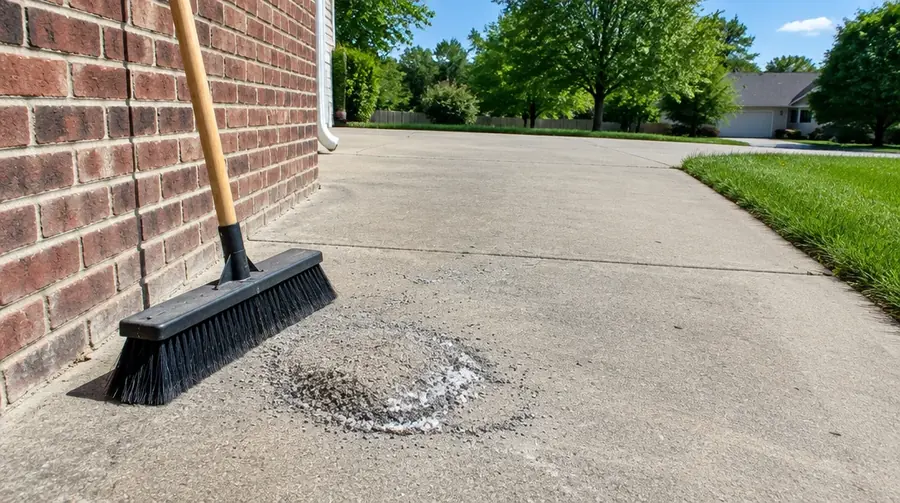
Scaling starts small. Look for rough, sandy patches where the smooth top has worn away, small pits, and flakes that come up when you sweep. It's usually worst in front of the garage, along the edges and in the wheel tracks. Small cone-shaped pops, where a piece of stone has broken out, are a different problem, though they show up in the same places.
Light scaling can be stopped. Clean the slab, let it dry and seal it, and then change how you treat it in winter. If the top has come away over a large area but the slab is still level and sound, resurfacing can give it a new wearing surface for about $3 to $7 per square foot. If it's cracked and sinking as well, read why your concrete driveway is cracking before you spend money on the surface.
If you're building new, the mix is your first line of defense. An air-entrained mix, with no water added at the truck, holds up to salt far better than a wet, plain mix. Every driveway we pour is a 4,000 psi air-entrained mix for that reason. On a steep drive where you'd need a lot of melter, a heated driveway takes salt out of the picture.
Common questions
What ice melt is safe for concrete driveway?
Calcium magnesium acetate is the gentlest. Calcium or magnesium chloride used thinly is the usual choice in deep cold. Avoid anything with ammonium nitrate or ammonium sulfate.
Is salt bad for concrete driveway?
In excess, yes. Rock salt brine soaks in and refreezes, which flakes the surface over time. Sealing the slab and using it sparingly limits the damage.
Can you put rock salt on a concrete driveway?
On a sealed slab more than a year old, a light scatter is fine above about 15°F. Keep it off new concrete for the first winter.
How long after concrete is poured can you put salt on it?
Wait a full year, and keep all deicers off it during its first winter. Use sand for grip until then.
Is ice melt bad for concrete driveways?
Any ice melt adds water and freeze-thaw cycles, so all of them do some harm. The gentler ones, used lightly on a sealed slab, do very little.
More driveway services
- concrete driveway installation
- concrete driveway replacement
- concrete driveway repair
- concrete driveway resurfacing
- stamped concrete driveway
- exposed aggregate concrete driveway
- driveway trench drain
- driveway drainage
- driveway apron
- concrete driveway sealing
- driveway crack repair
- sunken driveway repair
- driveway extension